1. Home
  2. Industries
  3. Financial services
  4. Equipment leasing brokers

Equipment finance sales dialer

How equipment leasing brokers use DialBreeze for SMB financing discovery: three lines per rep, a recording of every connected call, and an AI summary that captures equipment, amount, credit posture and the documents requested.

Updated September 28, 2026Financial servicesConditional fit: read the calling rules below

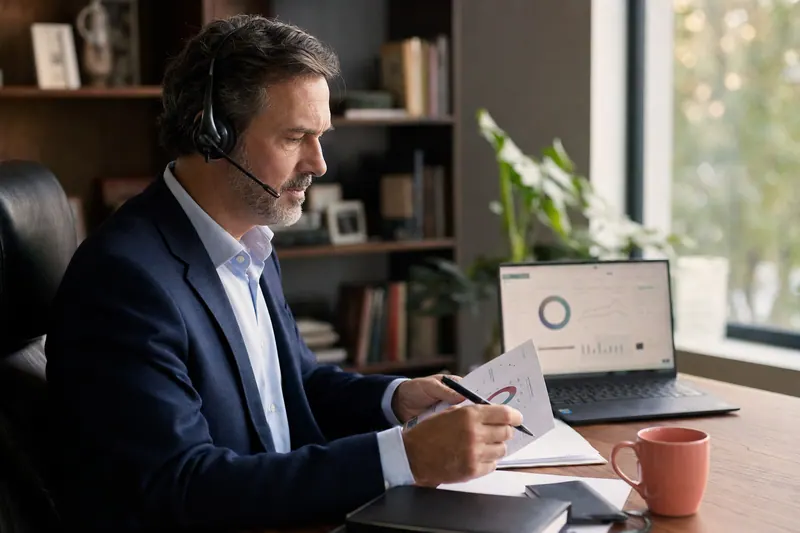
An advisor on a headset call reviewing a printed summary

The short answer

DialBreeze is a browser power dialer for equipment finance brokers and leasing reps working small business owners by phone. It rings up to three numbers at once, records each connected call, and after the call writes a summary with the equipment, the amount requested, the time in business, existing debt and the documents the owner agreed to send. A person on your team runs every conversation. Calling runs on your own Telnyx account.

A calling day for equipment leasing brokers.

The moments where a dialer, a recording and an after-call note change the outcome. Illustrative, not a customer story.

  1. 8:30 AM · the rep opens a list of 90 contractors and machine shops sourced from a trade directory, each row with the equipment category and years in business where it is known.

  2. 8:45 AM · three lines ring. One owner needs a used skid steer and thinks he will pay cash. Another wants a CNC mill but his bank already said no.

  3. 9:20 AM · the rep logs the second as a live opportunity: equipment, amount, time in business, prior bank decline and tax return timing.

  4. 1:00 PM · follow-up block. Owners who agreed to send a recent bank statement or tax return get called the same day the file is started.

  5. 4:00 PM · vendor block. Equipment dealers who referred the week's applications get a status call with the summary of each file on screen.

The workflow, list to follow-up.

The same four moves every session, described the way equipment leasing brokers work.

  1. Import the prospect list as a CSV with company, contact, phone, equipment category and any referral source. Your internal DNC and attempt caps apply.
  2. Dial up to three lines and take the live answer, using the recorded voicemail on the unanswered lines.
  3. Disposition: File started, Docs requested, Bank declined already, Prefer cash purchase, Send term sheet, Too early, Do not call.
  4. The AI note captures equipment, amount, time in business, existing obligations and the requested documents, so the file can be packaged without another discovery call.

What the notes look like after a call.

After each recorded call, DialBreeze writes a transcript, pulls out the fields this job cares about and suggests a next step. The card is a sample with fictional data. Check important details against the recording.

Dispositions for this workflow

  • 1File started
  • 2Docs requested
  • 3Send term sheet
  • 4Bank declined already
  • 5Prefer cash purchase
  • 6Too early
  • 7Callback requested
  • 8Left voicemail
  • 9Do not call
AI summarySample
Intent
Needs financing, bank already declined
Equipment
Used CNC vertical mill, about $85,000
Entity
S corp, 9 years in business
Credit posture
Bank declined; owner says no late payments, one equipment loan open
Timing
Wants the machine in 45 days
Documents
Two years tax returns plus three months bank statements
Next stepSend documents checklist today; call Thursday to confirm receipt and start prequalification

Equipment finance is a discovery job before it is a credit job

A broker who waits for completed applications competes with every other broker on price. The broker who calls first finds the deal while it is still a sentence in an owner’s head: a machine that keeps breaking, a truck that cannot pass inspection, a job that needs a second excavator.

That call is short and concrete. What is the equipment, how much is it, how long have you been in business, what is already financed, and when do you need it. A rep who collects those five facts has a file. A rep who only asks “are you interested in financing” does not.

DialBreeze rings up to three numbers for one rep and records every connected call. The rep runs the conversation. The AI writes it up after.

Three lists worth keeping apart

  • Prospect list. Owners who have not asked yet, sourced from directories, referrals or an equipment vendor’s customer base.
  • Open file list. Owners who agreed to send documents. These calls are about missing items and timing, and they should carry their own dispositions.
  • Vendor list. Dealers and sellers who refer applications. A weekly status call keeps the referral flow alive.

When those three live in one queue, files stall because the rep cannot see who already agreed to send a tax return.

Fields that make a file packageable

The difference between a file that funds and one that sits is the completeness of the facts:

  • Equipment: new or used, make and model, and whether there is a purchase quote.
  • Amount and down payment: the number requested and what the owner plans to put down.
  • Entity and tenure: corporation, LLC or sole proprietor, and how many years in business.
  • Existing obligations: open equipment loans, mortgages, leases and any recent decline.
  • Prior financing history: whether the owner has bought on credit before and how it went.
  • Timing: the date the seller needs the money, which usually sets the urgency.
  • Documents: tax returns, bank statements, a quote, an insurance certificate.

After each recorded call, DialBreeze writes a transcript and pulls those facts into structured fields with a short summary. The rep can package the file without calling the owner a second time to reconstruct the details. Check every amount against the recording, because a mistyped figure in a package becomes a declined deal.

Dispositions that match how deals move

  • File started: enough facts collected to prequalify. Create the task and set the document deadline.
  • Docs requested: the agreed list is out. The follow-up call should happen the day the file is opened, not a week later.
  • Bank declined already: useful information, not a dead end. It tells the rep which lenders to route toward.
  • Prefer cash purchase: a real answer. Keep it with a dated revisit and stop dialing it weekly.
  • Send term sheet: the owner wants numbers. Speed matters more here than anywhere else on the list.
  • Too early: the equipment purchase is next year. Set the callback then.
  • Do not call: it leaves every queue.

Rules that sit outside the dialer

Business-to-business calls mostly fall outside the FTC Telemarketing Sales Rule under 16 CFR 310.6(b)(7), but that is not a blanket exemption and it is not a TCPA exemption. Small business owners answer cell phones, and 47 CFR 64.1200(a)(1) still governs autodialed and prerecorded calls to wireless numbers. Keep solicitation calls inside 8 a.m. to 9 p.m. local time at the called party’s location.

Commercial lending is not the consumer framework, but 12 CFR 1002.9 can still require notifying an individual business applicant of action taken, generally within 30 days of a completed application. Broker and lender licensing varies by state and structure. Recording can require all-party consent, so disclose at the top of the call.

What you need to start

  • Your own Telnyx account with numbers and caller ID.
  • A prospect CSV with company, contact, equipment category and referral source.
  • A document checklist ready to send the same day.
  • A lender panel or credit policy that the dispositions map onto.

The 14-day trial runs in a sandbox. Load a sample list, run one three-line block, and read the summaries before you work live prospects.

The vendor relationship is the pipeline

Most equipment finance volume does not start with a cold owner. It starts with a dealer, a manufacturer’s rep or a seller who has a buyer in front of them and needs a financing answer quickly. That makes the vendor list the most valuable list a broker keeps, and it is also the list most brokers neglect.

A vendor status call is short. Which applications are open, what is missing, how long the decision takes and whether the seller’s customer is getting impatient. Vendors refer to the broker who answers the phone and closes quickly, not the one who waits a week to respond to a text.

Keep vendor calls on their own list with their own dispositions: application received, documents pending, decision made, declined, funded. The vendor should hear the answer from the broker before the buyer asks them.

What a term sheet conversation needs on the record

The moment an owner asks to see numbers, the file has to be complete. The rep needs the equipment and the quote, the amount requested, the down payment, the entity type and years in business, the existing obligations the owner is willing to disclose, and the timing the seller needs.

That is more detail than a hurried note holds. When the after-call summary carries those fields, the rep can build the term sheet without calling the owner back to ask what they already said. It also prevents the most common file error in equipment finance: a package built on a recollection of the amount rather than the number the owner actually stated. Always verify the figure against the recording before it goes to a lender.

Working a broker panel list

Independent brokers work with several lenders, and each has its own appetite: some fund used equipment under ten years old, some want a minimum time in business, some require a personal guarantee, some will look at a prior decline and some will not.

Once the panel is written down, the disposition set can route to it. A “bank declined already” outcome with the amount and the equipment on the record can go straight to the lender that fits, rather than starting the discovery all over again. That routing is what turns a declined bank deal into a funded one, and it only works when the call notes are complete enough to make the match.

Calling rules to check first.

  • TCPA
  • B2B calls
  • State lending and broker licensing
  • Recording consent
  • Adverse action requirements

Calls to a business about business equipment mostly fall outside the FTC Telemarketing Sales Rule under 16 CFR 310.6(b)(7), but business owners often answer on personal cell phones, where TCPA limits on autodialed and prerecorded calls to wireless numbers can still apply under 47 CFR 64.1200(a)(1). Keep solicitation calls inside 8 a.m. to 9 p.m. local time at the called party's location under 47 CFR 64.1200(c)(1), and honor every stop request. Equipment finance sits under commercial lending rules, not the consumer lending framework, but the Equal Credit Opportunity Act and Regulation B notification duties can still attach when a business applicant is an individual; 12 CFR 1002.9 requires the applicant to be notified of action taken, typically within 30 days of a completed application. Broker and lender licensing varies by state and by deal structure. Several states require all-party consent before recording, so disclose. DialBreeze enforces the mechanics you configure. It does not determine licensing, credit policy or disclosure duties, and this is not legal advice.

This is operational guidance, not legal advice. DialBreeze enforces the internal DNC list, quiet hours and attempt caps you configure; consent and list eligibility stay with yus. How the responsibility splits.

DialBreeze is not a fit if…

Better to know now than in week two of a trial.

  • You need underwriting, credit scoring or document collection inside the dialer. DialBreeze is the calling workflow, not a lending platform.
  • You want AI to quote rates or approve an application on the call. Every DialBreeze call has a person on it, and pricing is your credit policy.
  • You sell consumer vehicle financing rather than commercial equipment. The compliance profile and the disclosure duties are different.
  • Your leads arrive only as completed referrals from a captive vendor portal with no calling step.

Questions from equipment leasing brokers.

Something missing? Email brayden@themilnerteamfl.com.

Why call small business owners instead of waiting for applications?
Because most equipment purchases start with a conversation, not a form. A short discovery call finds the equipment, the amount and the timing, which is what a file needs before it can be packaged.
What does the AI capture on a financing call?
A transcript plus structured fields: equipment, amount, entity type, years in business, existing obligations, prior declines, timing and the documents requested. Verify every figure against the recording before you put it in a package.
Can I use it for vendor and dealer follow-up?
Yes. Keep the vendor list separate from the borrower list so dispositions and reporting stay clean, and use vendor-specific outcomes such as application status.
Do do-not-call rules apply to business owners?
The business-to-business exemption in 16 CFR 310.6(b)(7) covers many calls to a business but not every rule. A personal cell phone can still bring TCPA restrictions into play, so honor every stop request. This is not legal advice.
Who owns the caller ID?
You do. Production calling runs on your own Telnyx account and numbers. Twilio and managed calling are planned, not available yet.
What does it cost?
Solo is $49 per seat per month, Team is $149 per month for three seats, and Studio is $399 per month. Carrier usage is billed separately by Telnyx.

See it on your own call list.

Start a 14-day sandbox trial. We set it up, you run a real session with test numbers, then decide.

Start a 14-day trialPricing