1. Home
  2. Industries
  3. Home services
  4. Home security installers

Security system sales dialer

How home security companies use DialBreeze to work documented lead sources and monitor-customer upgrades: three lines per rep, a recording of every connected call, and an AI summary that captures the system age, the appointment booked and the consent source behind the call.

Updated September 28, 2026Home servicesConditional fit: read the calling rules below

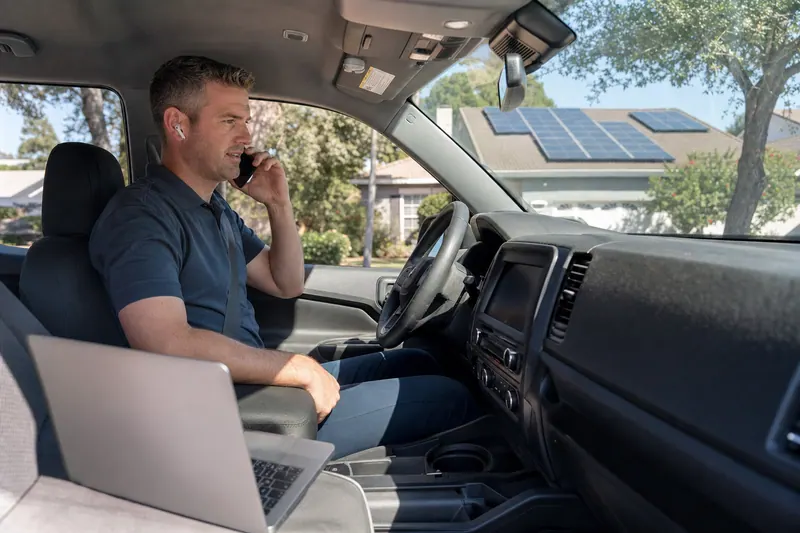
A home services rep on a call from his truck, solar panels on the roof behind

The short answer

DialBreeze is a browser power dialer for security company reps calling documented leads and existing monitoring customers. It rings up to three numbers at once, records every connected call, and after the call writes a summary with the system details, the appointment booked and where the lead came from. A human on your team makes every call. Calling runs on your own Telnyx account.

A calling day for home security installers.

The moments where a dialer, a recording and an after-call note change the outcome. Illustrative, not a customer story.

  1. 8:00 AM · the rep opens the lead list: 40 inquiries from the weekend home-show booth and web form, each row tagged with the source and the consent language captured at signup.

  2. 8:10 AM · three lines ring. One voicemail gets the recorded drop, one books a Wednesday consult, and the third says they already have a system from a national brand.

  3. 8:15 AM · the AI summary is on the booked lead: 12-year-old wired panel, no cameras, new baby in the house, wife wants doorbell and garage coverage, evening appointment only.

  4. 10:00 AM · upgrade block. Monitoring customers from the acquired book get called about camera and smart-lock add-ons, with their contract status on the row.

  5. 2:00 PM · cleanup block. Yesterday's no-answers get attempt two, and the rep marks every stop request immediately so the internal DNC list stays clean.

The workflow, list to follow-up.

The same four moves every session, described the way home security installers work.

  1. Import leads with their source and consent record on each row, plus upgrade and win-back lists from your monitoring platform. Your internal DNC list, quiet hours and attempt caps apply before every session.
  2. Dial up to three lines. Take the live answer; drop the recorded voicemail on the rest.
  3. Disposition in security terms: Consult booked, Upgrade booked, Has system already, Renter, Price shopper, Wrong number, Do not call.
  4. The AI note captures system age, coverage gaps and the appointment window, so the tech arrives with the right kit instead of a second visit.

What the notes look like after a call.

After each recorded call, DialBreeze writes a transcript, pulls out the fields this job cares about and suggests a next step. The card is a sample with fictional data. Check important details against the recording.

Dispositions for this workflow

  • 1Consult booked
  • 2Upgrade booked
  • 3Has system already
  • 4Renter, not applicable
  • 5Price shopper
  • 6No answer, retry
  • 7Wrong number
  • 8Left voicemail
  • 9Do not call
AI summarySample
Intent
Consult booked, camera-heavy wishlist
Existing system
12-year-old wired panel; monitoring through national brand
Coverage gaps
No cameras; garage and back door unmonitored
Household
New baby; wife evenings only; dog in yard
Source
Home show booth, Apr 12; written opt-in captured
Objection
Worried about contract overlap with current monitoring
Next stepConsult Wed 6:00 PM; rep to bring buyout/switch options in writing; confirm by text Tue

Why this page is honest about the fit

Home security is one of the most phone-intensive trades in home services, and also one of the most enforced. The FCC’s prerecorded telemarketing actions in this industry are a matter of public record, and most of them trace to the same root: leads with consent trails nobody can produce. That is why this page carries fit B rather than A. The DialBreeze workflow (three human-dialed lines, recordings, dispositions, summaries) suits security sales well. What decides whether your company should dial at all is upstream of any tool: where the leads came from, and whether the consent can be shown on demand.

If your list is your own monitoring book, home-show signups, web forms with your own language, or referral partners who document their introductions, the workflow below is a strong fit. If it is co-op lists of unknown lineage, no dialer makes those calls safe.

The documented-lead workflow

Every lead row in a security campaign should carry its source and its consent language, and the call plan should treat that as the first field, not an afterthought. The rep sees “home show booth, Apr 12, written opt-in” before the number rings. Leads without a source do not get dialed; they get fixed or deleted. This is slower than a blast and it is the difference between a growing dealership and a warning letter.

The call itself is a consultation booking, not a sale: system age, what is covered today, the gaps the homeowner already knows about (the dark side door, the garage, the package theft street), and an appointment window. The AI summary captures those specifics so the tech arrives with the right kit: a panel swap for the 12-year-old wired system, cameras for the blank spots, and a written answer to the contract-overlap question the homeowner raised on the phone.

The upgrade block: the book you already own

The most underworked list in security is the installed base. Customers added cameras years ago, moved the smart home conversation forward without you, or inherited a system in a house they just bought. The upgrade block calls the book with the relationship intact: an established business relationship under the FTC rule generally covers monitoring customers within 540 days of their purchase, and the call is short, specific and honest.

The discipline that keeps it clean: contract status on every row, so the rep knows who is mid-contract, who is month-to-month and whose monitoring was transferred in an acquisition. “Upgrade booked” and “Upgrade declined, revisit next year” are separate dispositions, because the revisit list is next year’s upgrade block and the decline list is not.

Appointments that survive the calendar

A security consult is an in-home, hour-plus visit, so a no-show costs a tech’s evening. The call workflow treats the appointment as a process, not a checkbox: the summary captures the household constraints (evenings only, dog in yard, gate code), the confirmation step is its own task, and the recording documents what was promised about visit length and whether both decision-makers needed to be present. Companies that skip that last point reschedule a third of their consults; the ones that ask “will your spouse want to be part of this?” on the phone keep them.

The AI score on recorded calls also trains new reps fast: the manager reviews the ten calls with low scores (missed consent language, oversold response claims, fumbled the contract question) instead of auditing a week of dials.

What never to say on a security call

Three lines stay out of the script no matter how the competitor advertises. First, guaranteed police response times: permits, jurisdiction and false-alarm policies govern what actually happens, and the call that promises otherwise becomes the recording used against you. Second, coverage outcomes on a monitoring switch (“your insurance will drop by more than the fee”): maybe, sometimes, not yours to promise. Third, anything prerecorded to a cell phone without the consent your counsel has verified. The dialer records your calls; that cuts both ways, which is exactly the point.

Win-backs and cancellations, worked honestly

The cancellation list is a sales list in disguise, and it is also where the auto-renewal and cancellation rules of monitoring contracts live. The honest version: call recent cancellations with a specific, verifiable offer, document the reason in the summary (moving, new monitoring bundled with cable, an unresolved false-alarm fee), and disposition the real refusals permanently. The recording settles the disputes that cancellation conversations generate, and the summaries tell you whether the problem is price, product or the last tech who visited.

The rules, briefly

Your monitoring book mostly rides the established business relationship in the FTC Telemarketing Sales Rule. Prospect calls need national DNC scrubbing, 8 AM to 9 PM local hours, immediate opt-out honoring, documented consent and attention to the TCPA’s wireless rules. State alarm installer licensing and municipal alarm permits sit outside the dialer but shape what your calls may promise. Several states require all-party recording consent; use a disclosure. DialBreeze enforces the mechanics you configure. Consent records, licensing, permits and claims discipline are yours, and nothing here is legal advice.

What you need to start

  • Your own Telnyx account with numbers and caller ID.
  • Lead lists with source and consent on every row, plus your upgrade and win-back lists as CSVs.
  • A recording disclosure and one headset per rep.
  • A disposition set the office, the techs and the monitoring team agree on.

The 14-day trial runs in a sandbox. Load a sample lead list with sources, run a three-line block, and read the summaries before your real campaign starts.

Calling rules to check first.

  • TCPA
  • Telemarketing Sales Rule
  • National DNC and internal DNC
  • Recording consent
  • State alarm installer licensing
  • Local alarm permits

This vertical has real telemarketing history: the FCC has brought enforcement actions over illegal prerecorded telemarketing in home security, so consent discipline is not theoretical. Calls to your monitoring customers generally ride an established business relationship under the FTC Telemarketing Sales Rule (16 CFR 310.2: a purchase within 540 days). Marketing calls to prospects require national DNC scrubbing, 8 AM to 9 PM local hours, immediate opt-out honoring, and attention to the TCPA rules at 47 CFR 64.1200 on prerecorded and autodialed calls to wireless numbers; documented, sourced consent for every cold lead is the working standard. Many states license alarm installers and many municipalities require alarm permits and false-alarm registration; sales promises about response should not outrun what licensing and permits actually allow. Several states require all-party recording consent; use a disclosure. DialBreeze enforces your internal DNC list, quiet hours and attempt caps; consent records, licensing and permits are yours.

This is operational guidance, not legal advice. DialBreeze enforces the internal DNC list, quiet hours and attempt caps you configure; consent and list eligibility stay with yus. How the responsibility splits.

DialBreeze is not a fit if…

Better to know now than in week two of a trial.

  • Your leads come from co-op lists with no real consent trail. That problem starts upstream and no dialer fixes it.
  • You want AI voice agents qualifying prospects. A human on your team makes every call.
  • You need installation scheduling, monitoring onboarding or billing inside the dialer. DialBreeze is the calling workflow next to those tools.
  • You need predictive pacing for a hundred-seat call center. DialBreeze is up to three lines per seat.

Questions from home security installers.

Something missing? Email brayden@themilnerteamfl.com.

Why fit B instead of A for security companies?
The workflow fits well, but this vertical's phone history is regulated hard: consent quality on purchased leads and prerecorded-call enforcement are real issues. If your leads come from sources you control with documented opt-ins, the fit is strong. If they come from mystery co-op lists, fix that first.
What does the AI capture on a consult call?
Existing system and age, coverage gaps, household constraints, the appointment window and objections like contract overlap. The tech arrives knowing whether to bring a swap kit or a full install.
Can we call customers from a monitoring book we acquired?
Carefully. An established business relationship under the FTC rule depends on the transaction history, and state law can add requirements around transferred accounts. Review the acquired list's provenance with counsel before the first block. This is not legal advice.
How do we handle 'I already have a system'?
Disposition it, honestly. Take-over and switch offers exist, but the call still has to respect DNC and consent rules, and the recording documents that you did not misrepresent the competitor or the savings.
Does the dialer help with permits?
No, and it should not pretend to. Alarm permits and false-alarm registration are municipal. What the dialer does is keep the promises made on calls documented, so marketing never outruns what the permit allows.
What does it cost per seat?
Solo is $49 a month per seat, Team is $149 a month for three seats, Studio is $399 per month. Your Telnyx account bills calling and numbers separately. Recordings, transcripts and AI summaries are included.

See it on your own call list.

Start a 14-day sandbox trial. We set it up, you run a real session with test numbers, then decide.

Start a 14-day trialPricing