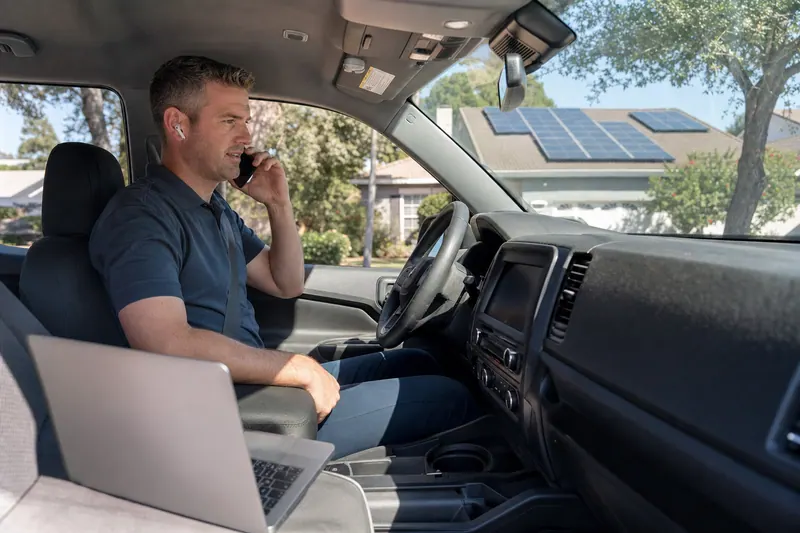
The first hour decides the job
Restoration is a response-time business. The homeowner with a burst supply line calls or fills three forms, and whoever calls back first with a credible plan usually gets the job, because the alternative is standing in a wet house watching the clock. The unglamorous failure mode is the lead that arrived at 9 PM and was worked at 9 AM, after two competitors. The callback block exists to make sure that never happens: three lines per coordinator, the newest inquiry first, and the disposition the moment the call ends.
On a true emergency callback, the conversation has exactly the fields dispatch needs: what happened, what is wet, whether the water is off, whether the insurance claim exists yet, and when the homeowner can let a crew in. The AI summary writes those into structured fields during the call, so the truck rolls with extractors and the right number of air movers instead of a callback to ask “how bad is it”.
The insurance line you do not cross on the phone
Every restoration conversation brushes against insurance, and the phone call is where companies get into trouble. The safe lane is concrete: document the damage, explain mitigation steps, schedule the inspection, and tell the homeowner what documentation their carrier will ask for. The lane that requires a license in several states is negotiating, interpreting or steering the claim itself. Public adjuster licensing exists precisely for claim advocacy, and a coordinator who promises “this will be covered” or talks a homeowner into a scope change is doing licensed work without a license, or worse, misrepresenting coverage.
The workflow guardrail: insurance status is a field (None, Filed, Adjuster assigned, Dispute), not a conversation topic for the phones. Front-office staff can say what the process will look like; coverage outcomes belong to the adjuster and the policy. Some states also restrict assignment-of-benefit arrangements outright, so the office should know its own state’s rules before the call script promises anything about paperwork.
Storm work: work your lists, not a zip code
After hail or a named storm, the temptation is to call every address in the damage path. The defensible version is narrower and converts better anyway: your own customer list first (these homes are known, the relationship exists, and the call is a check-in), then genuine inquiries from landing pages and door conversations, then carefully sourced lists with national DNC scrubbing and an honest inspection offer. Street-by-street documentation on the call (missing shingles visible from the ground, a fence down, a window cracked) keeps the pitch factual.
The summaries become the triage sheet. Forty calls produce a ranked list: active leaks first, exposed structures second, cosmetic claims third, and the dispositions tell the office how many inspections to schedule before the out-of-town storm chasers eat the market.
Referral partners are a list, not a lunch
Plumbers, realtors, insurance agents and property managers send restoration work, and they do it for the companies that answer fast and communicate. That maintenance is phone work: a monthly block that checks in, asks what the partner needs, and confirms the after-hours number is still correct. The AI summary from a partner call captures the commitments made (a one-hour response promise, a preference for texts over calls, a co-branded card order), and the recording settles what was promised.
Disposition the partner list separately from consumer work: “Sent a job this month”, “Asked for a lunch”, “Needs cards”, “Dormant”. Over a quarter, the reporting shows which relationships are real, and the next block spends its minutes where the referrals actually come from.
Estimates, scopes and the self-pay fork
Mold remediation and reconstruction estimates age badly: the quote from three weeks ago is competing with the homeowner’s doubt about whether the work is needed at all. The follow-up call with the scope question attached (“you mentioned the crawlspace readings worried you, has that changed?”) revives a share that email never will. The fork that matters in restoration is insurance versus self-pay, and the disposition captures it: a self-pay lead needs a price conversation and a start date, an insurance lead needs documentation discipline and patience. Treating them as one “open estimate” pile is how both are lost.
The AI summary keeps the scope details attached to the lead: what was measured, what the homeowner fixated on, whether a spouse needs to be on the next call. The crew and the office work from the same page, and the follow-up addresses the actual hesitation instead of re-reading the quote aloud.
The rules, briefly
Callbacks to your own inquiries ride the established business relationship in the FTC Telemarketing Sales Rule; cold consumer marketing needs national DNC scrubbing, calling hours and immediate opt-out honoring, with the TCPA’s wireless rules on top. The restoration-specific lines: no coverage promises, no claim negotiation without the license your state requires, and no misrepresentation of damage. Several states require all-party recording consent; a short disclosure covers it. DialBreeze enforces the mechanics you configure. Licensing, claims conduct and list provenance are yours, and nothing here is legal advice.
What you need to start
- Your own Telnyx account with numbers and caller ID that can handle your emergency volume.
- Lead, estimate, partner and storm lists as CSVs.
- A recording disclosure and one headset per coordinator.
- A dispatch-ready disposition set agreed with the field crews.
The 14-day trial runs in a sandbox. Load a sample emergency week, run a three-line block, and watch how the summaries hand off to dispatch before your real lines take over.