The short answer
This is the talk track for a landscape office coordinator calling a homeowner who requested an estimate. It opens on the quote the homeowner already asked for, confirms the property details the salesperson needs, surfaces the competing bid question early, and closes on a specific estimate window tied to a route the crews already run.
The script
Sample talk track. Fictional names. Adapt it to your offer and your rules.- Rep
Hi, is this Mrs. Alvarez? This is Dana from Fernbrook Landscapes. You filled out our form for a mowing quote a couple of weeks ago, and I am calling to get you on the estimate list before the spring routes fill.
- Prospect
Right, yes. Things got busy and I never called back.
- Rep
That is exactly why I call. Two quick things so the quote is right. Is it still a mowing quote, or has anything changed with the property?
- Prospect
Well, we also have standing water by the patio after it rains. Would you look at that too?
- Rep
Yes, and that is worth looking at before mowing season, because the fix changes the grading. So the salesperson walks the yard with both in mind. Is the gate access on the side by the garage still where it was, and are mornings or after four better for the visit?
- Prospect
After four works better.
- Rep
Then I have two windows this week. Thursday between four and six, or Friday morning if that is easier. Which one should I hold?
- Prospect
Thursday is fine. Are you going to be expensive?
- Rep
You will have the number in writing before anyone lifts a rake, and the mowing agreement is separate from the drainage fix, so you can take one without the other. If you are getting another bid, that is fine too. Compare the mow height and the frequency in writing, because that is where quotes quietly differ.
What the quote follow-up call is for
A landscape firm leaks revenue in the gap between a quote request and a walk-through. Homeowners fill out forms in March, the season accelerates, and the requests that did not get a call inside a week quietly sign with whoever called them. The follow-up call exists to close that gap, and it is the highest-conversion list a landscape office owns because the homeowner asked for it.
The second list is lapsed agreements. A mowing client from last season is warmer than any new form, and the renewal conversation rides on an established relationship rather than a cold introduction.
Before you dial: list and season
Load the quote list as a CSV with name, phone, the form language, the date submitted and any property notes the salesperson left. Sort oldest-first, because a stale quote is the one most likely to be lost. Keep route-adjacent leads, the homes near streets your crews already service, on their own list with their own tag so the conversion story stays measurable.
Most estimate and renewal calls ride an established business relationship under 16 CFR 310.2: a purchase within the last 540 days or an inquiry within the last 90 days. Cold marketing calls to never-customers still need national DNC screening, and solicitation calls stay inside 8 a.m. to 9 p.m. local time under 16 CFR 310.4(c).
The opening: reference the form, hold the season
“You filled out our form for a mowing quote a couple of weeks ago, and I am calling to get you on the estimate list before the spring routes fill.”
The opener works because it does three jobs in one sentence: it names the request, so the homeowner knows this is not a stranger; it explains the delay as service, not neglect; and it gives a real reason to book now, which is that routes actually fill. Season pressure is honest here, and honesty is why it works.
The talk track, in order
The script runs confirmation, property details, scheduling, price framing. Three habits make it work.
First, ask what changed. “Is it still a mowing quote, or has anything changed with the property” invites the drainage complaint, the new fence, the dog. Every detail captured now saves the salesperson a second visit.
Second, schedule in windows tied to routes, not open-ended mornings. “Thursday between four and six” is answerable; “whenever works” produces an appointment that gets moved twice.
Third, frame price before it is raised. The homeowner is comparing bids whether they say so or not. Saying out loud that the agreement and the drainage fix are separate, and steering the comparison to mow height and frequency, makes your quote easier to read than the cheaper one.
Objections you will hear
“I am still thinking about it.” Ask what the deciding factor is. Price, timing and trust each get a different answer, and the summary should carry which one it was.
“I got a cheaper quote.” Do not argue price. Ask whether the cheaper quote includes edging, height specification and the drainage walk. Written scope is the comparison that favors the careful quote.
“Call me in the spring.” Take the date, log it as the callback, and actually call. A homeowner who says spring means it, and the call on that date arrives pre-trusted.
“I never filled out a form.” Apologize once, verify nothing, and log it as a wrong number. Arguing with a homeowner about their own form is a review waiting to happen.
“Just leave the quote in the mailbox.” Offer the walk-through as what makes the number accurate, and accept the mailbox if they insist. A dated callback after delivery keeps the thread alive.
Dispositions in landscape terms
- Estimate scheduled with the window and route.
- Renewed for lapsed agreements that signed again.
- Program upsell with the add-on discussed.
- Price shopper with the comparison point captured.
- Wrong season, call back with the month.
- Route-adjacent lead tagged for its own reporting.
- Not interested with the reason.
- Left voicemail with the recorded drop.
- Do not call on any stop request.
What the AI summary captures
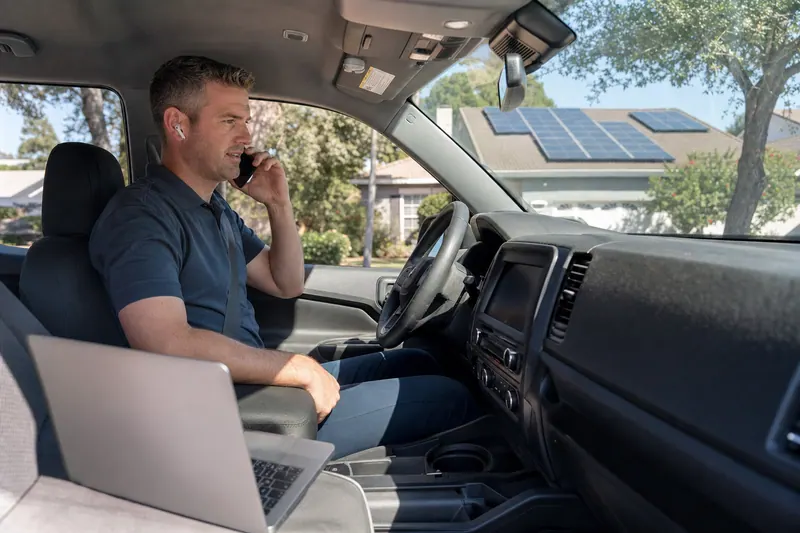
DialBreeze records and transcribes connected calls, then writes structured fields. For landscape calls the useful ones are the property notes, access details, the services discussed, the competing-bid situation, the scheduling window and the agreed next step. The salesperson reads the summary in the truck before walking the yard, so the visit starts where the phone call ended. Verify gate codes and any access instructions against the recording before putting them on a route sheet.
Compliance lines that matter
Estimate and renewal calls mostly ride the established business relationship in 16 CFR 310.2, but that rule does not cover never-customers, and the wireless rules under 47 CFR 64.1200 apply to homeowner cell phones regardless. Keep solicitation inside the local calling window, honor every stop request the same day, and use a recording disclosure, because several states require all parties to consent. DialBreeze applies your internal DNC list, quiet hours and attempt caps. It does not decide whether a number may be called. This page is not legal advice.
Practice it before the real list
Run five sandbox calls where you never discount and never argue with a cheaper bid. Then run five where the homeowner says they have three quotes. The second set teaches the written-scope move, which is how a careful quote wins against a cheap one.
FAQ
How soon should a quote request be called?
What if they are comparing bids?
Should I confirm the property details on the phone?
What about last year's customers who never renewed?
Sources
- ecfr.gov /current/title-16/chapter-I/subchapter-C/part-310/section-310.2
- ecfr.gov /current/title-16/chapter-I/subchapter-C/part-310/section-310.4
- law.cornell.edu /cfr/text/47/64.1200
Operational guidance, not legal advice. Rules vary by state and by campaign.